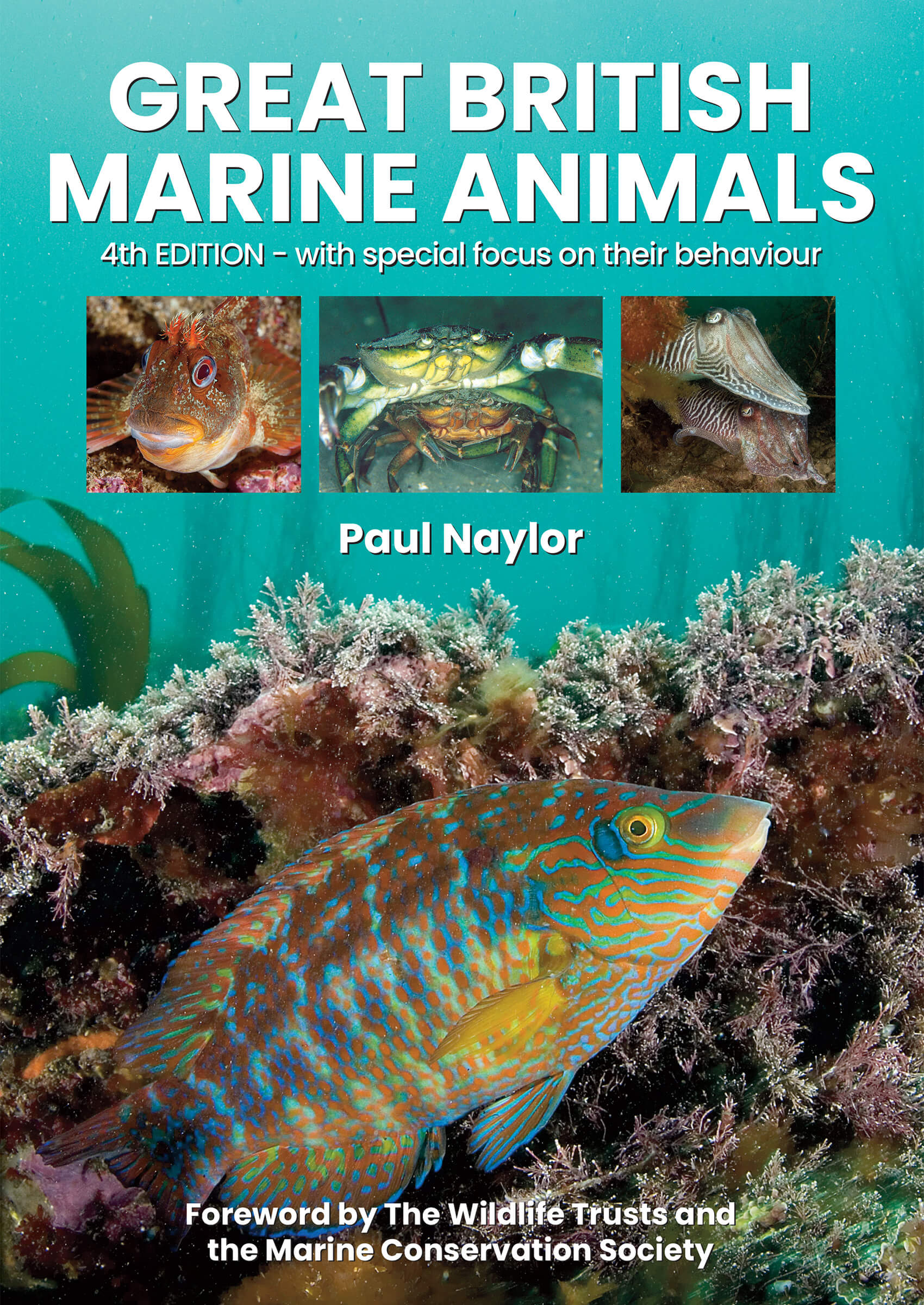
‘Great British Marine Animals’
Now available from bookshops, dive shops and online; including from NHBS Environment Bookstore (01803 865913 www.nhbs.com). For trade enquiries, please contact Paul Naylor on 07767 364949 or by e-mail.
Features of the 4th edition of Great British Marine Animals include:
- 500 new photographs (out of over 900) showing further aspects of the fascinating behaviour of common animals in addition to illustrating…
- 40 extra species, making 320 in total
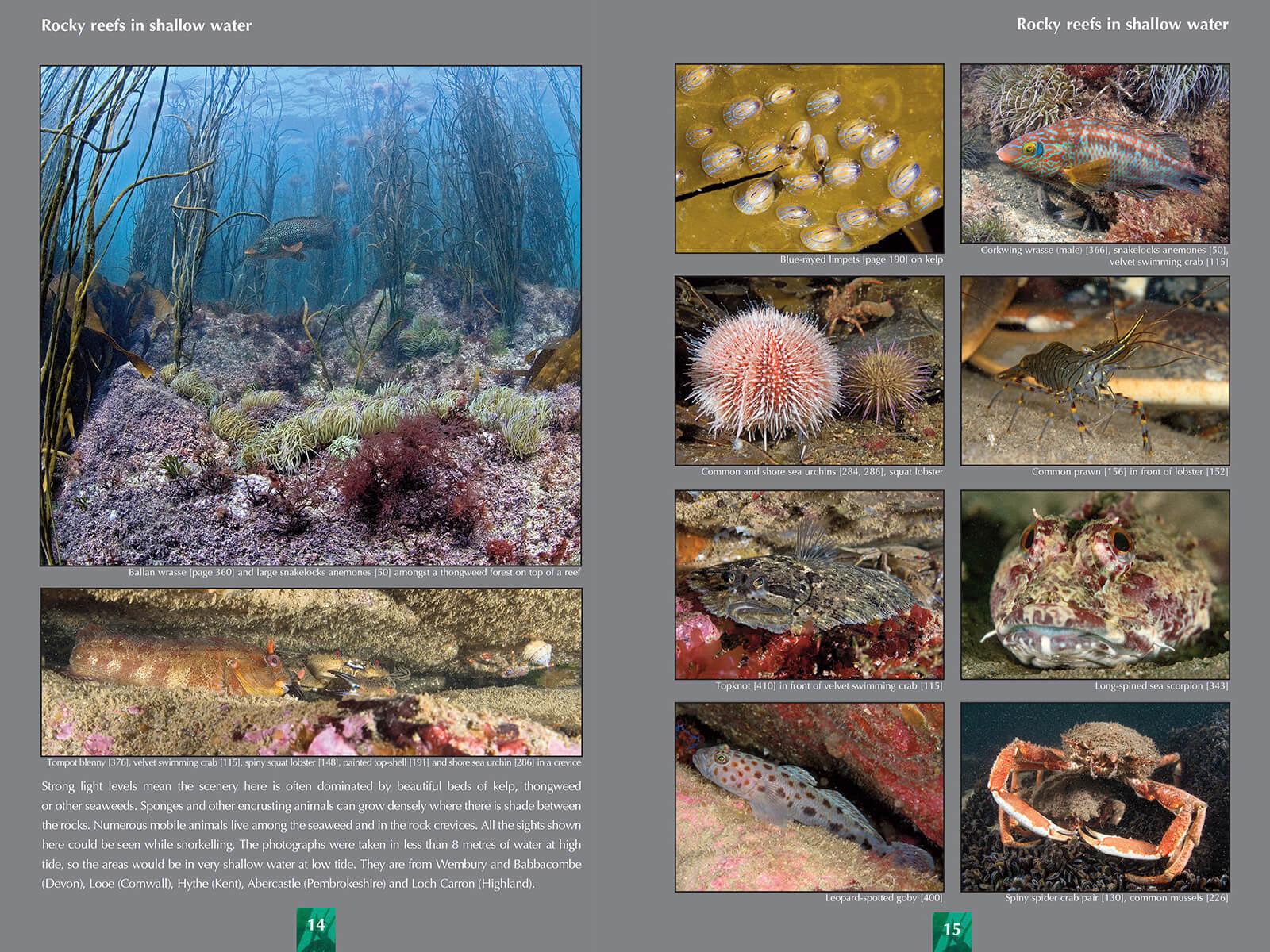
- An expanded introduction showing examples of intriguing behaviour and a selection of habitats with some of the typical animals that live in them
- A foreword by The Wildlife Trusts and the Marine Conservation Society
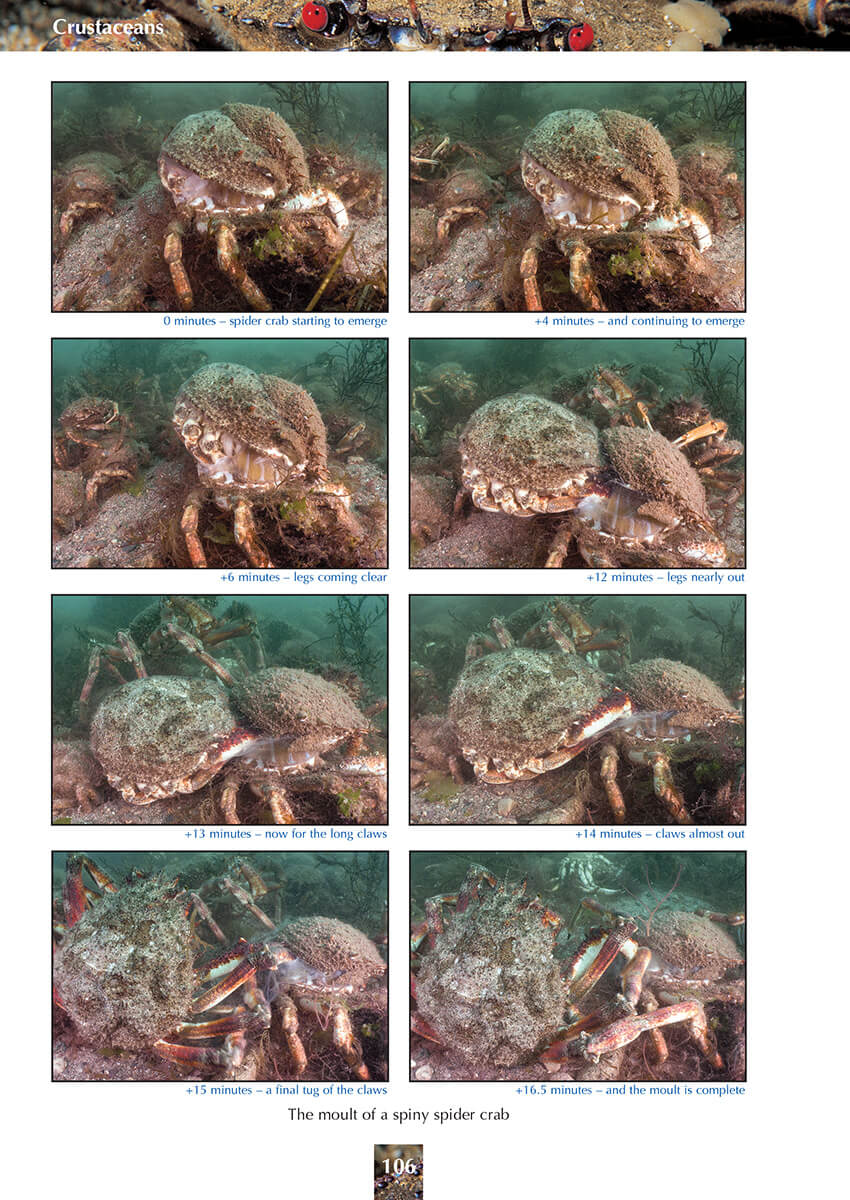
- Unusual action shots of ‘sneaking’ tompot blennies, moulting and decorating crabs, egg-laying cuttlefish, co-operative wrasse, camouflaging sea scorpions, battling limpets, a sea hare defending istelf and many more…
Great British Marine Animals (previously 1st edition 2003, 2nd edition 2005, 3rd edition 2011) was preceded by Marine Animals of the South West (1st edition 1996, 2nd edition 2000), also by Paul Naylor.
…well edited, incisive and highly informative. A treat to read and a joy to browse – the images alone could sustain a coffee-table art book.
It’s a reference book, but when you have a moment just dip in at random for fascinating reflections of what British marine-life diving is all about.
I cannot recommend it highly enough, to marine biologists and non-marine biologists alike…
This book is recommended to anyone with an interest in marine life, from armchair naturalists and curious kids to university-level biologists and beyond. …so much more than a species list – it’s a guide to how we can search for them and at the same time understand their lives.
…includes even more stunning underwater photography and captivating text than its predecessors. …this book is a celebration of our wonderful marine life which will inspire and educate readers with stunning photography and fascinating accounts of animal behaviour and interactions.
It is nothing less than a triumph: a gasp on every page, the knock-you-dead pictures are combined with readable text. This book is a series of revelations about a world where most of don’t go, and it tells us of the vast unseen diversity of the seas. Every page of Naylor’s book is an inducement to look after this cold wet stuff better than we do.